
























The difference comes down to one thing: a single-acting cylinder uses hydraulic pressure to move in one direction only, while a double-acting cylinder uses hydraulic pressure to both extend and retract. That one difference affects speed, control, cost, hoses, pumps and which jobs each cylinder suits.
This guide explains how each type works, compares them side by side, and shows where Power Team cylinders of each type are used in the field. New to hydraulics? Start with Intro to Hydraulics 101.
How a single-acting cylinder works
A single-acting cylinder has one hydraulic port. Pumping oil into that port pushes the piston and extends the plunger. When the pressure is released, something other than hydraulics has to bring the plunger back.
There are two common ways it returns:
- Spring return: A spring inside the cylinder pushes the plunger back once the pump’s release valve opens. This is the most common design for portable jacks and cylinders.
- Load (gravity) return: The weight of the load pushes the plunger back down. This suits lifting jobs where the load is always resting on the cylinder.
Because there is only one port and one hose, single-acting cylinders are simple, lightweight and economical. The trade-off is that retraction is slower and not powered, and a spring takes up room inside the cylinder, which can add to its collapsed height.
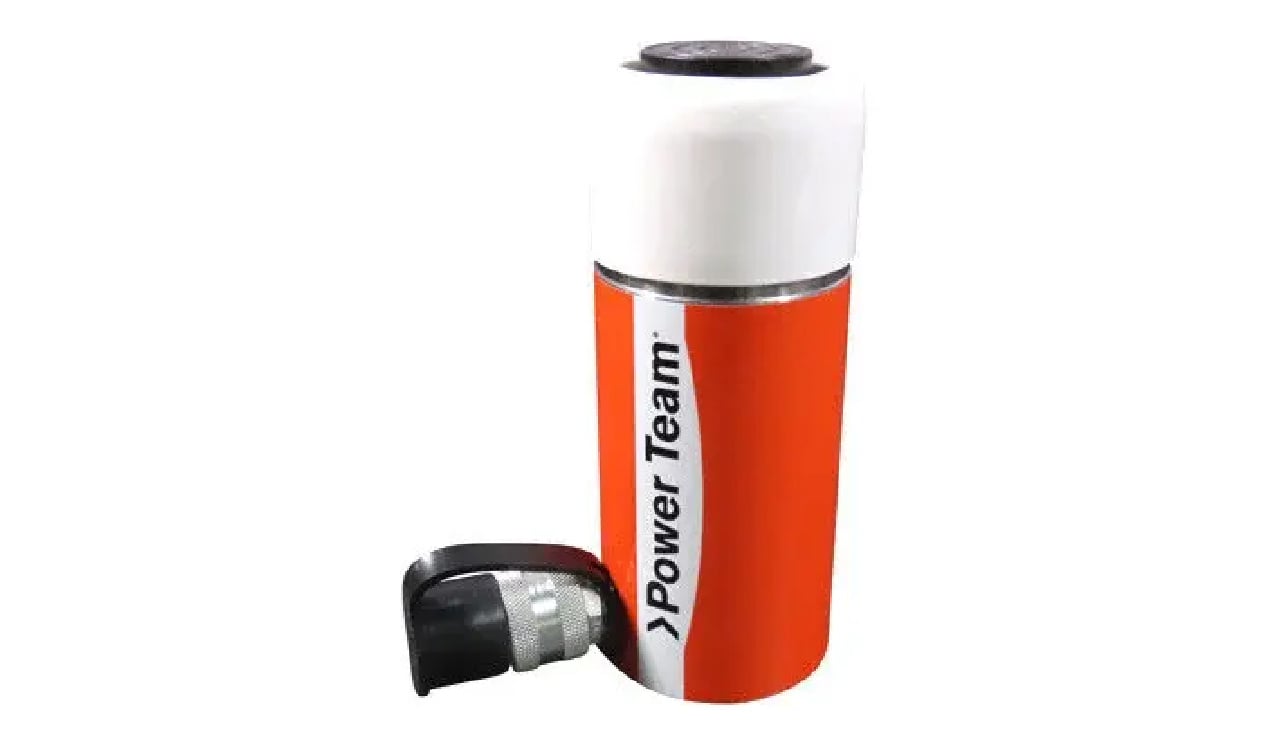
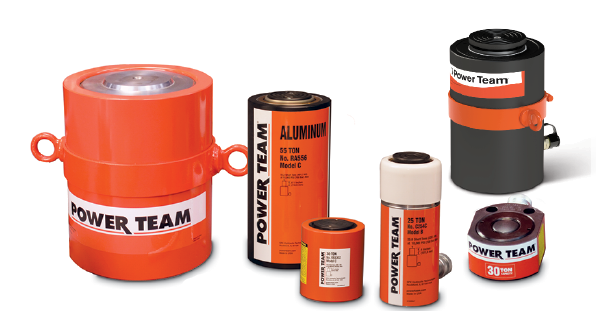
Power Team’s C, CBT, RP, RA, RLS, RSS, RA_L & RT-Series cylinders are single-acting, spring-return cylinders built for lifting and pressing, from 5 to 100 tons. Maximum-sized springs speed up piston return. In one foundation repair project, a C256C (25 tons, 6-1/4 in stroke) paired with a PE553 pump lifted homes in tight crawl spaces.
How a double-acting cylinder works
A double-acting cylinder has two hydraulic ports, one on each side of the piston. Oil sent to the first port extends the cylinder. Oil sent to the second port retracts it, while the oil on the other side flows back to the pump’s reservoir.
That means the cylinder is powered in both directions. It can push and pull, retract quickly under control, and hold its position in either direction when the valve is closed. It works without relying on a spring or the weight of the load.
One detail to know: retract force is usually lower than extend force. On the retract side, the piston rod takes up part of the piston area, so the same pressure acts on a smaller surface. Check the cylinder’s rated pull capacity if you plan to pull loads with it.
Power Team’s RSS, RH, RDG, RD, RGL& R-Series cylinders are double-acting, hydraulic-return cylinders from 10 to 500 tons, designed for high cycle life in jobs like bridge lifting, building reconstruction and mining equipment maintenance. In a casting mold removal application, RD-Series cylinders with a custom pump system gave stable, level lifting that reduced mold damage.
Single-acting vs. double-acting at a glance
Single-acting |
Double-acting |
|
|---|---|---|
Hydraulic ports |
1 |
2 |
Hydraulic Powered direction |
Extend only |
Extend and retract |
How it retracts |
Spring or load weight |
Hydraulic pressure |
Retract speed and control |
Slower, not controlled by pump |
Faster and controlled |
Hoses needed |
1 |
2 |
Pump valve |
3-way (advance / release) |
4-way (advance / retract / hold) |
Weight and cost |
Lighter, lower cost |
Heavier, higher cost |
Collapsed Height |
Lower |
Higher |
Can pull loads |
No |
Yes, at rated pull capacity |
Typical jobs |
Lifting, pressing, jacking |
Pushing and pulling, positioning, long strokes, frequent cycling |
Which one should you choose?
Choose a single-acting cylinder when the job only needs force in one direction and the cylinder can return on its own:
- Lifting machinery, structures or vehicles with a jack or lifting cylinder
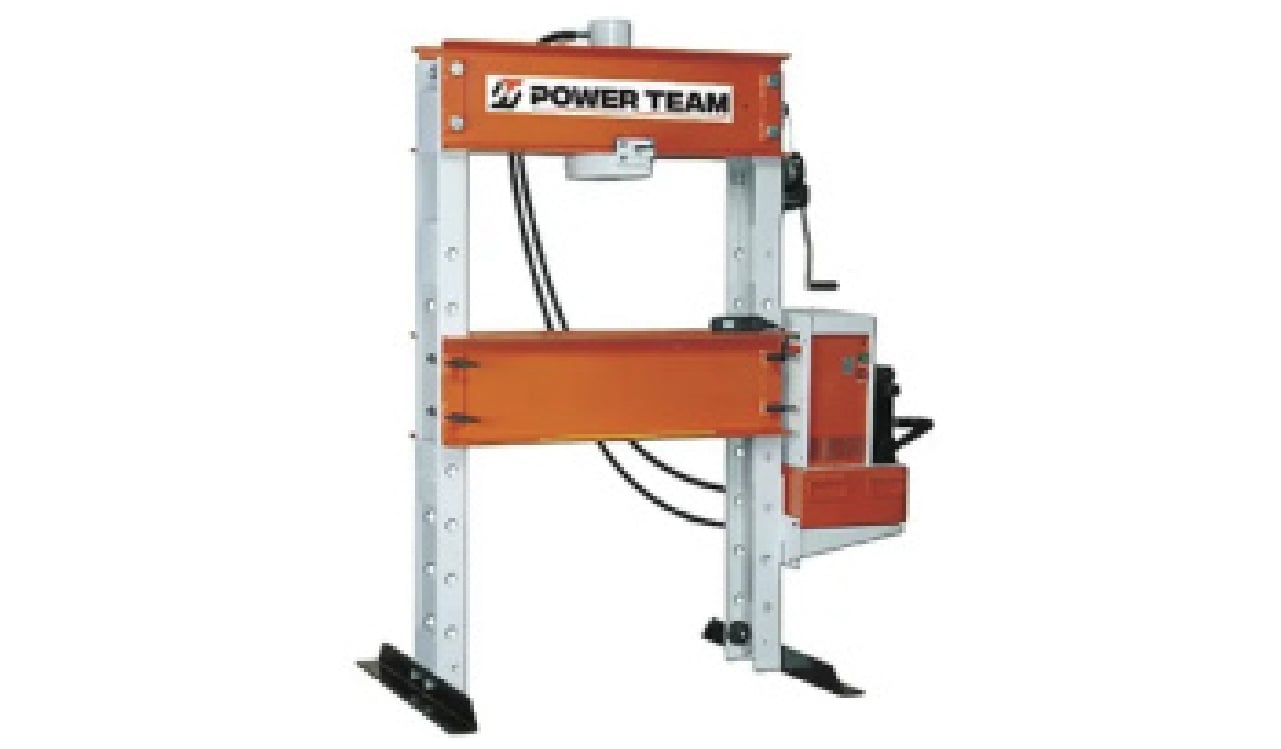
- Pressing, bending or straightening work
- Maintenance and field jobs where light weight and one hose make setup faster
- Tight spaces with restricted heights
- Jobs where budget matters and a slower return is acceptable
Choose a double-acting cylinder when you need powered movement both ways or tighter control:
- Pulling as well as pushing, such as in pulling or removal tools
- Lowering a load under control rather than letting it drop with gravity
- Long strokes, where a spring return would be slow or impractical
- Production work with frequent cycling, where faster retraction saves time
- Positioning, alignment or holding loads in place in either direction
If you’re unsure, start with the direction of force, how fast you need to cycle, and whether the load must be lowered under control. Two sizing tips from Power Team: use no more than 80% of a cylinder’s rated capacity and stroke, and for high-cycle work (over 2,500 cycles in the cylinder’s lifetime), choose RD, RH, RP or C-Series cylinders.
Matching the pump and valve
The cylinder type decides the rest of the system, so match them before you buy.
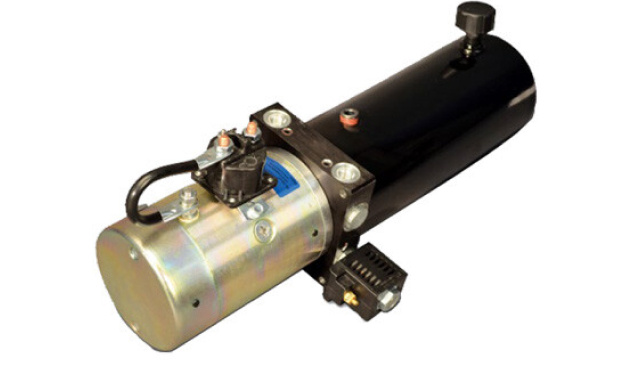
- Single-acting cylinders run on a pump with a 3-way valve (advance and release) and one hose. Most hand pumps are set up this way.
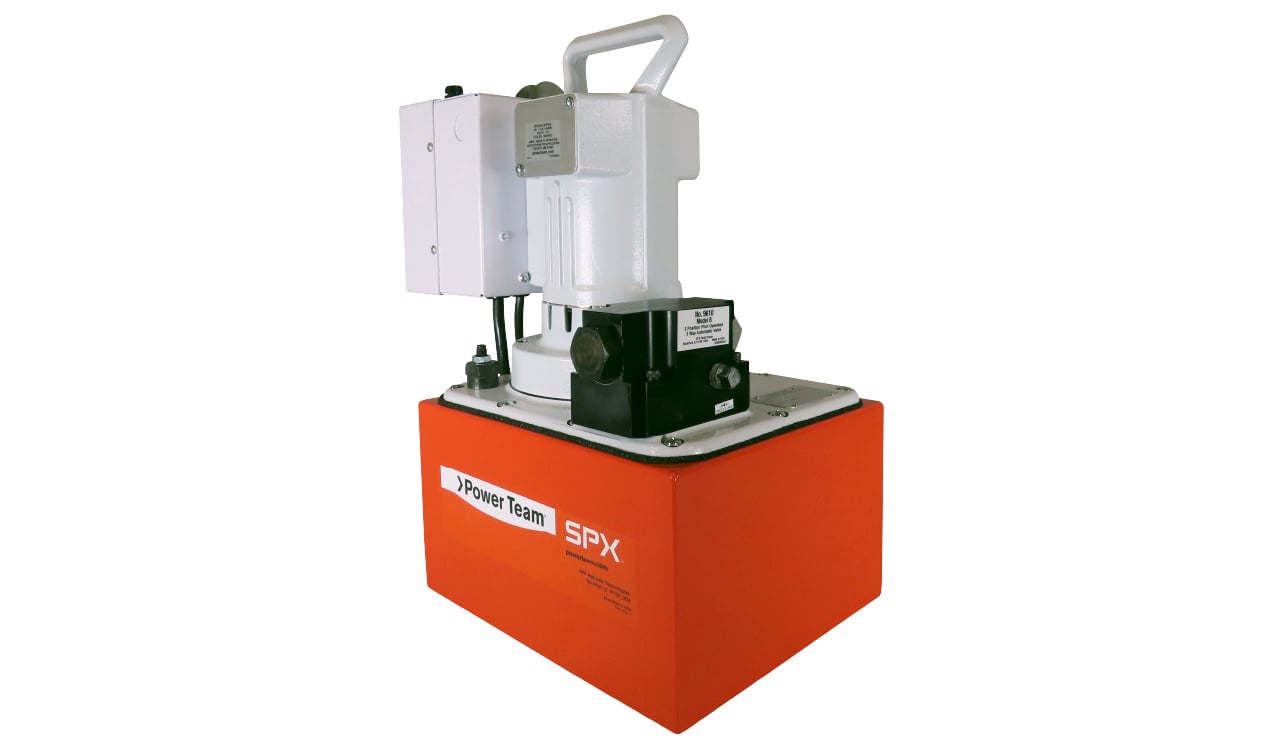
- Double-acting cylinders need a pump with a 4-way valve (advance, retract and, on many valves, hold) and two hoses.
A single-acting pump cannot power the retract side of a double-acting cylinder. Also check that the pump’s reservoir holds enough usable oil to fill the cylinder’s full stroke, and use the fluid the manufacturer recommends. Our guide on how to select the right hydraulic fluid covers the options. Find pumps, valves and hoses for both cylinder types in the Power Team product catalog.
See both types in action
- Remote bridge launching: Power Team cylinders and a gas-powered pump launched a bridge without a crane in an off-grid location.
- Plant maintenance with a lifting manifold: an LM4S manifold with four RA1006 cylinders gave balanced kiln lifting.
- Five-million-pound structure lift: synchronized cylinders and motion control handled incremental lifting and controlled lowering.
Browse more case stories.
FAQ
What is the main difference between single-acting and double-acting cylinders? A single-acting cylinder is powered in one direction and returns by spring or load weight. A double-acting cylinder is powered hydraulically in both directions.
Is a double-acting cylinder stronger? Not on the push stroke. At the same pressure and bore, extend force is about the same. The difference is that a double-acting cylinder can also pull and retract under power.
Can I use a double-acting cylinder as single-acting? It can extend with one port connected, but it will not retract under power, and nothing returns it reliably. Check the manufacturer’s guidance before running it this way.
Why does my single-acting cylinder retract slowly? Spring-return speed depends on the spring, hose length, oil temperature and any restriction in the return path. Cold, thick oil and long hoses are common causes.
Which is better for lifting? For most lifting and jacking, a single-acting cylinder is enough and simpler to set up. Choose double-acting if the load must be lowered under precise control.
Find the right cylinder
Hydraulic Technologies offers single-acting and double-acting cylinders, pumps and accessories through Power Team. Search spec sheets for any model in the Document Finder, or browse the full product catalog.
Ready to buy? Our products are sold through authorized distributors. Find a distributor near you for pricing and availability or contact our team for help sizing a cylinder.