










































Data centers power computing and AI capabilities in offices, factories, and homes. Thousands of pieces of equipment must be moved in and installed as more and more data centers are constructed to meet growing demand. Efficiency is critical to bringing them online in a timely manner, but the top priority remains avoiding costly equipment damage or worker injuries.
Here, we’ll look at the complexity of moving oversized, bulky, heavy equipment into this type of facility, and how heavy lifting and movement tools paired with an application-specific workflow can help.
A Heavy Lift Scenario: Installing Data Center Equipment
The heart of a data center is the servers, generators, switching and networking equipment, UPS units, and cooling systems that create and sustain computing power. This equipment is sensitive to internal and external damage and must be handled with care, but these projects often come with tight deadlines, so there is little time to correct mistakes or change processes midway through. Each move must be executed correctly from the start.
The facility itself has narrow corridors, multiple support pillars, low overhead clearance, and strict floor loading limits, which can restrict available paths for transport and “wiggle room” around obstacles. The move requires stable, precise hydraulic lifting and controlled horizontal movement across a variable path to bring equipment into its final position.
Staging the Move
In this situation, there are multiple types of equipment of different shapes, sizes, and weights to move throughout the facility, including ground floor and overhead locations, and precision alignment in racking and cabinets. The primary aspects of the move include:
- Unloading equipment from a truck.
- Moving it inside the building.
- Maneuvering it through corridors and into confined spaces.
- Aligning components with racks and cabinets for final installation.

Vertical Movement: Hydraulic Lifting Options
By its nature, vertical movements risk drops and bumps that can damage the delicate internal components and protective enclosures of electronic equipment. Controlling speed and providing adequate support keeps loads balanced and reduces wobbling or slippage over vertical distances.
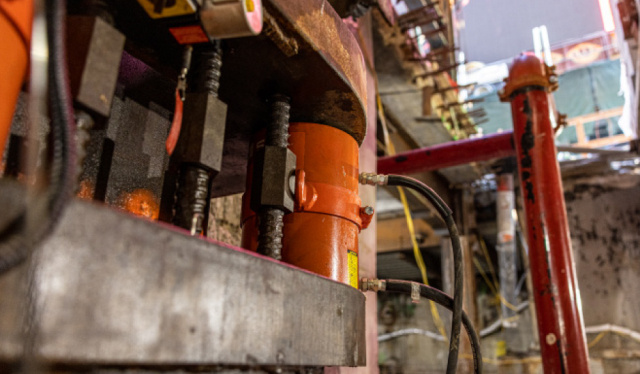
Hydraulic cylinders and jacks are trusted, reliable tools that apply steady force for raising and lowering objects gently and with precision. Multiple cylinders, or lift points, can be located around an object to add stability and distribute the weight of the load more evenly during lifting.
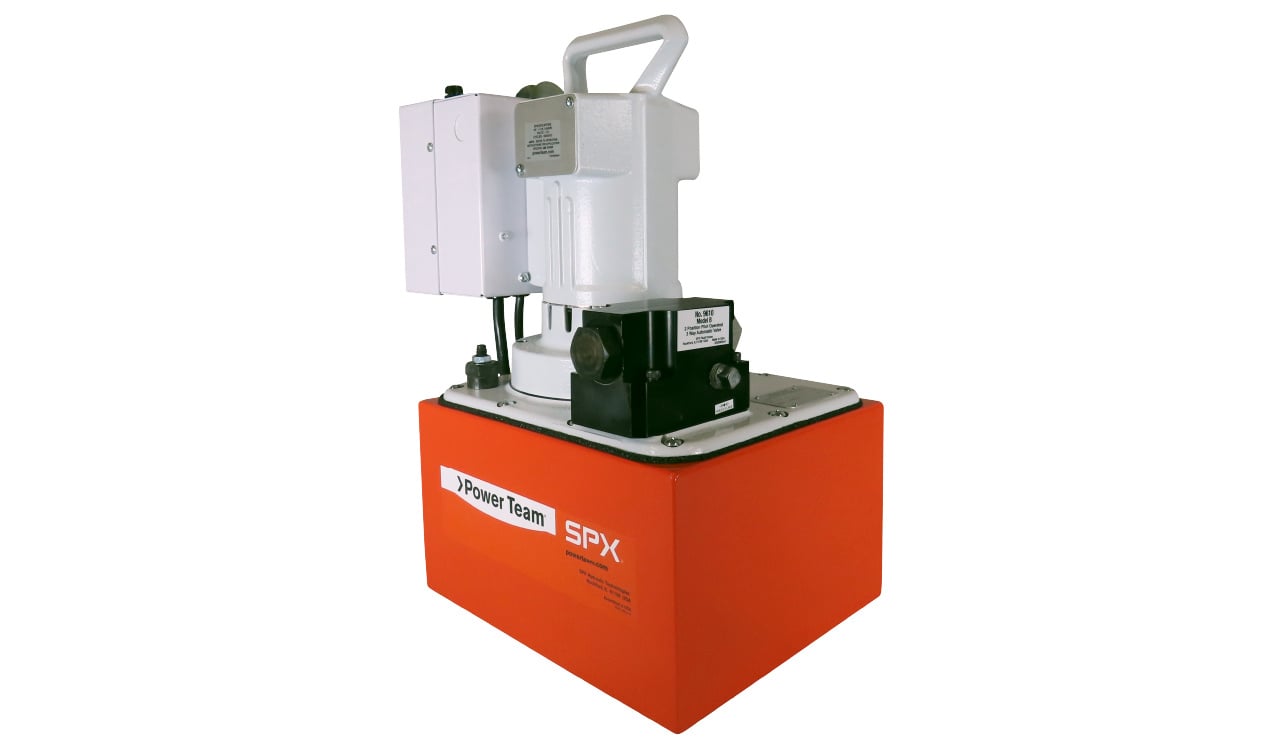
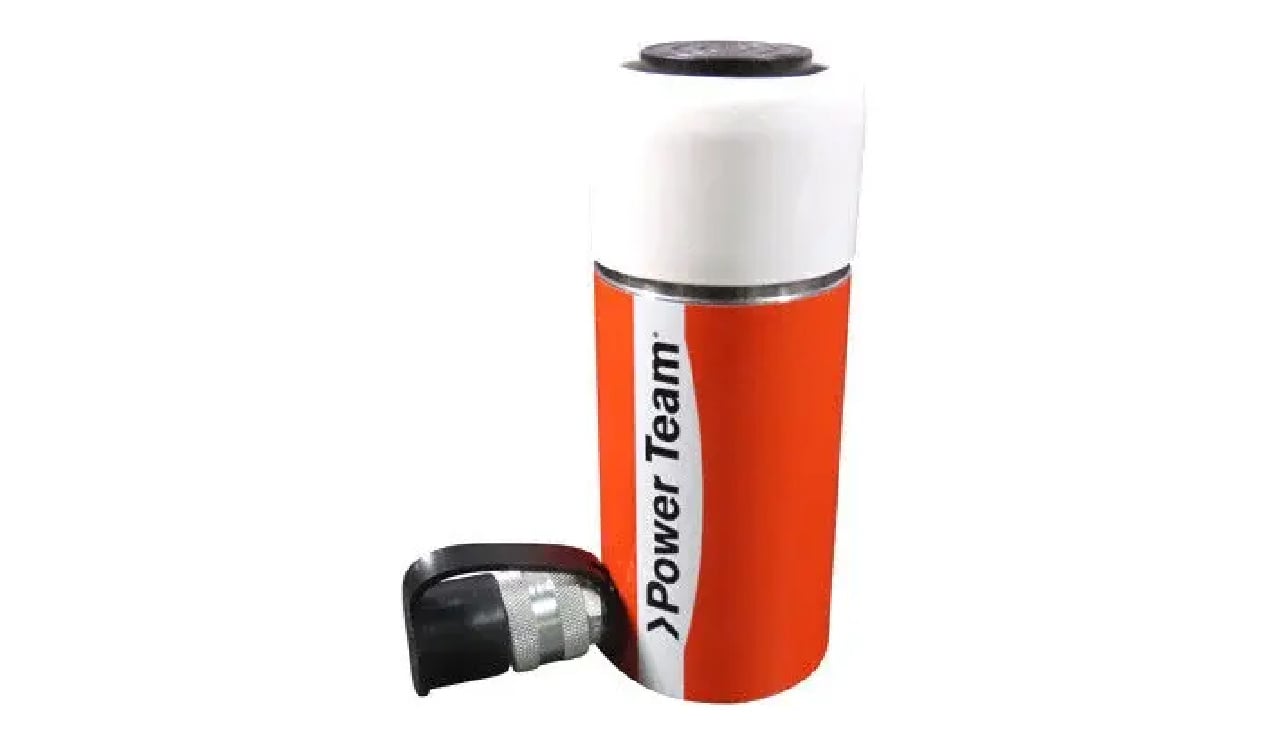
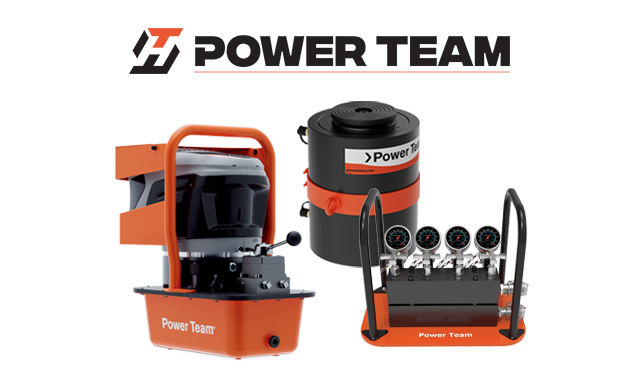
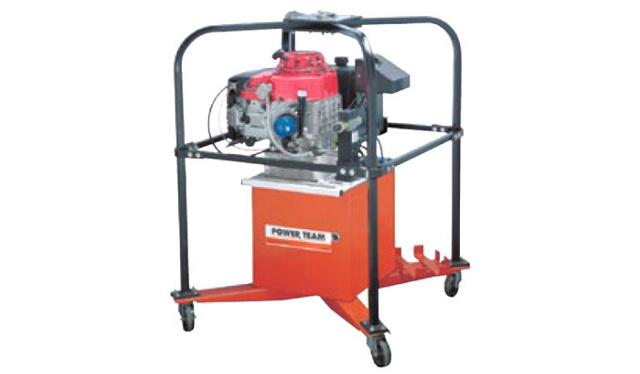
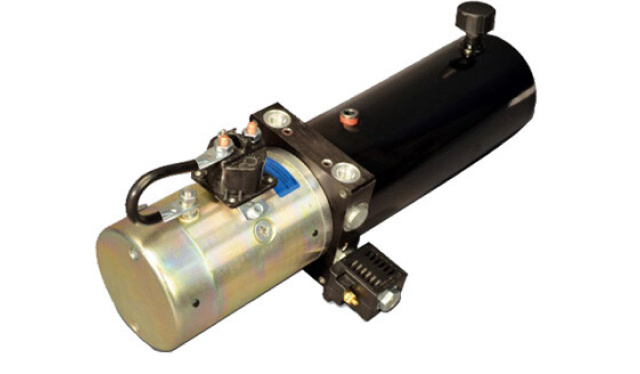
Power Team jacks and cylinders, pumps, manifolds, and control units manage stable, predictable vertical movement. Options include, but are not limited to:
- High-capacity jacks for short-distance vertical motion.
- Single- and double-acting cylinders with various stroke lengths and capacities.
- Locknut cylinders for sustained holding of raised loads.
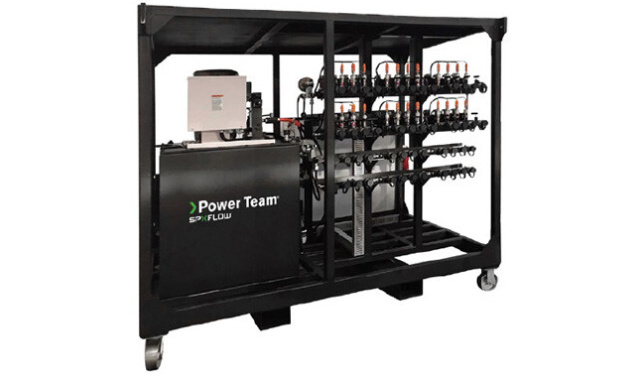
- Manually-controlled multi-valve manifolds for multi-point lifting.
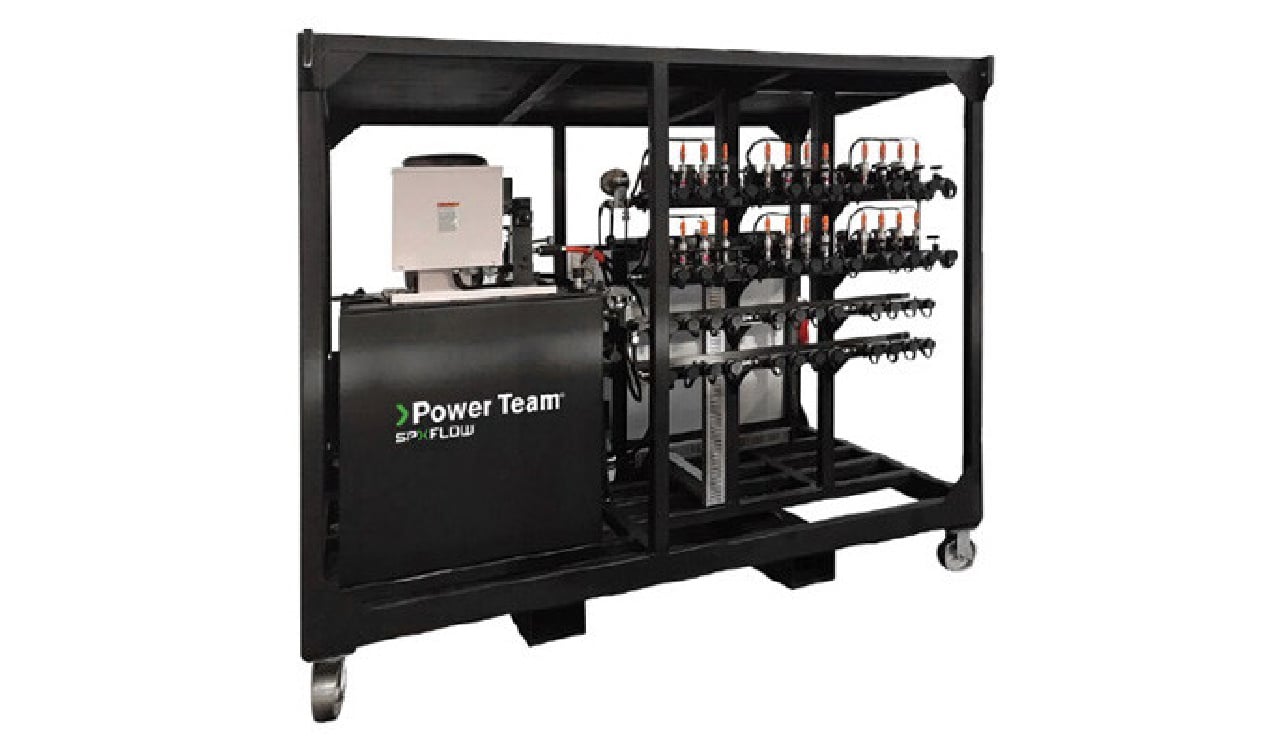
- The all-in-one eSync system for multi-point synchronous lifting with automated, closed-loop motion control.
Horizontal Movement: Motorized Dollies
Maneuvering data center equipment through corridors or around structural pillars and other obstacles is difficult. Paths may change direction frequently, and the weight or size of equipment precludes carrying it manually.
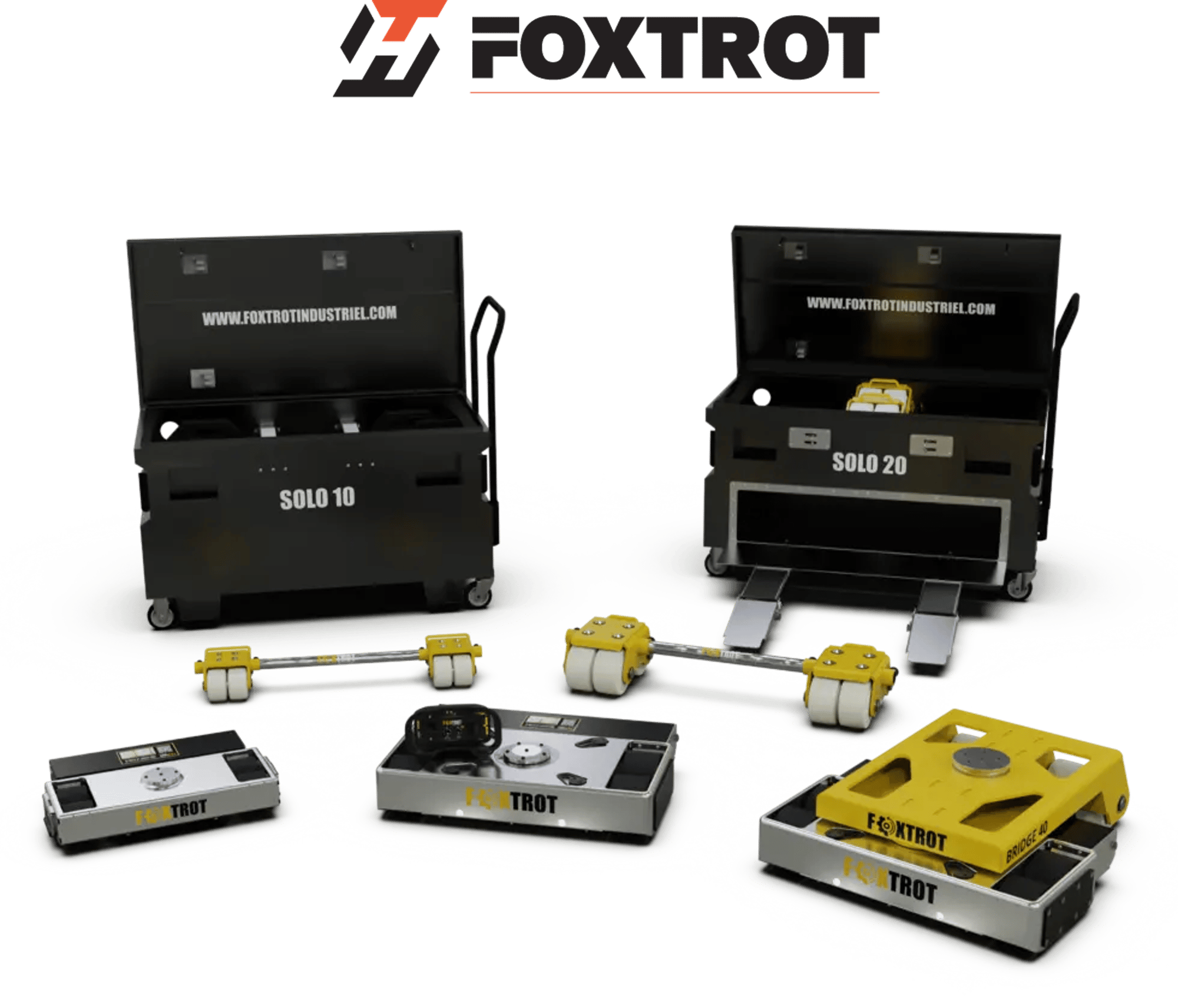
Foxtrot motorized dollies can move heavy loads up to 60 tons horizontally, supporting equipment on a sturdy, wheeled platform. The load stays low to the ground, and its downward force prevents slippage or runaway movement.
With remote control operation and steering and wheels that are driven independently, Foxtrot dollies can easily maneuver through tight, confined spaces, over cracks up to 1”, and on top of plates up to .25” high. These features keep the load moving toward its final destination, which is critical in facilities with strict floor loading limits.
Purpose-Built, Integrated Systems Make Equipment Placement Safe and Efficient
No two loads are exactly the same, and neither is the process of moving them from place to place. As a result, what works in one scenario could risk damage or injuries in another. In many data center installations, limiting factors may include:
- Heavy, bulky equipment that’s sensitive to vibration, bumps, or drops, which makes manual lifting or suspension risky.
- Limited-clearance spaces with racks and cabinets on multiple levels of the facility, which limit the utility of scissor lifts, mobile lifts, or powered risers.
- No overhead access for a crane or hoisting equipment with rigging.
- Bays of multi-level racking with weight limits, which require efficient movement and careful load distribution in confined spaces.
- The need to maintain a steady pace of work without downtime or damage so installers can complete connections and bring the facility online quickly.
Heavy Lift Solutions Cut Risk and Save Time
When your crew is responsible for moving multiple pieces of sensitive equipment in a short time, relying on “good enough” lifting systems or changing plans halfway through simply aren’t options. Still, it can be hard to know which type of moving equipment is the right choice or how real-world conditions affect calculations. This trial-and-error approach adds time, labor, and expense that you and your customer can’t afford.
Another challenge in limited-space applications is getting lift equipment to the point of use, which is difficult with bulky wheeled lifts and material handling units. In contrast, many cylinders, pumps, and even the eSync system are compact and can be moved easily around a facility. Likewise, low-profile motorized dollies are portable and small enough to fit in areas barely larger than the load itself.
For this data center scenario, a custom-engineered Heavy Lift Solution pairs versatile Power Team and Foxtrot equipment with a comprehensive workflow plan for every stage of the move.
- Application-specific equipment such as jacks, single- and double-acting cylinders, and motorized dollies that keep loads supported and eliminate stray, or uncontrolled motion.
- A setup plan and validated workflow to save time on the jobsite.
- Planned transition points for transferring the load between jacks, cylinders, and dollies.
- Hoses, pumps, manifolds, valves, and motion control components.
Find the Right Solution for Your Application
Our Heavy Lift Solutions team has broad experience working with different types of loads and hydraulic equipment, including critical infrastructure components and other mission-critical applications. We can engineer an integrated plan that saves your crew time and protects sensitive components in any setting.