


















































Field-proven heavy lift safety practices that reduce risk on highway and rail projects.
Why safety must lead every infrastructure heavy lift plan
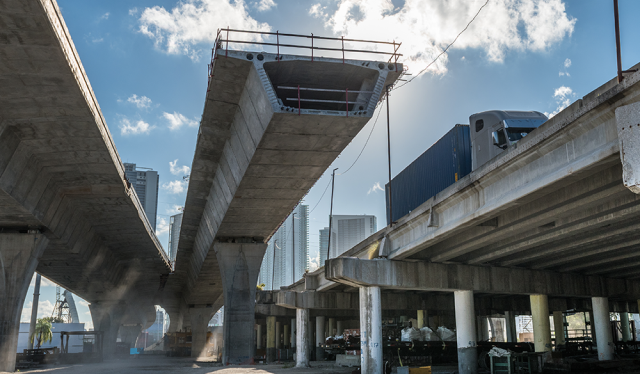
Whether raising a freeway overpass to meet new clearance standards or jacking a rail bridge for bearing replacement, infrastructure teams face one non-negotiable priority: safety. Hydraulic heavy lift systems offer enormous advantages in control and efficiency, but they also concentrate large forces into compact footprints. Successful projects depend on both well-engineered equipment selections and disciplined risk management practices that respect these forces from planning through execution. The foundation of a safe heavy lift is a rigorously developed lift plan. For highway and rail structures, this begins with structural modeling to understand how loads will be redistributed as each pier, abutment, or bent is unloaded and reloaded. Engineers work from as-built drawings, field inspections, and sometimes instrumentation data to estimate dead loads, live loads, and reserve capacity. From there, they define acceptable limits for deflection, rotation, and twist across the structure during every stage of the lift. These limits inform decisions about the number and placement of lift points, allowable stroke differentials, and the sequence of jacking steps. In parallel, the project team identifies environmental and operational constraints. On busy corridors, traffic control plans, work-hour windows, and noise restrictions can all affect how the lift is staged. Weather risks, particularly wind and temperature swings, must also be considered, as they can influence both material behavior and worker safety. By capturing these variables early, planners can choose a hydraulic configuration and sequence that respects both structural behavior and the realities of the jobsite. Modern case studies show just how effective well-planned synchronous hydraulic lifts can be for infrastructure. For example, replacing bridge bearings in tight freeway corridors has been completed within a matter of days when synchronous lift technology is mandated and properly engineered, even when working with spans weighing hundreds or thousands of tons. External resources that document these projects—such as case studies of five-day bridge repairs enabled by synchronous lift solutions—offer valuable insight into achievable schedules and risk controls. One such example is a Florida bridge repair project that leveraged synchronized hydraulic pumps, high-tonnage cylinders, and a carefully engineered bearing replacement kit to meet an aggressive five-day closure window: Synchronous Lift Enables 5-Day Bridge Repair. By grounding heavy lift activities in robust engineering, clearly defined safety limits, and proven hydraulic technologies, infrastructure owners and contractors can reduce uncertainty on their most complex bridge and tunnel projects. This disciplined approach not only protects workers and assets but also supports predictable schedules and minimizes disruption for the traveling public.
Engineering the right hydraulic solution for complex bridge and tunnel lifts
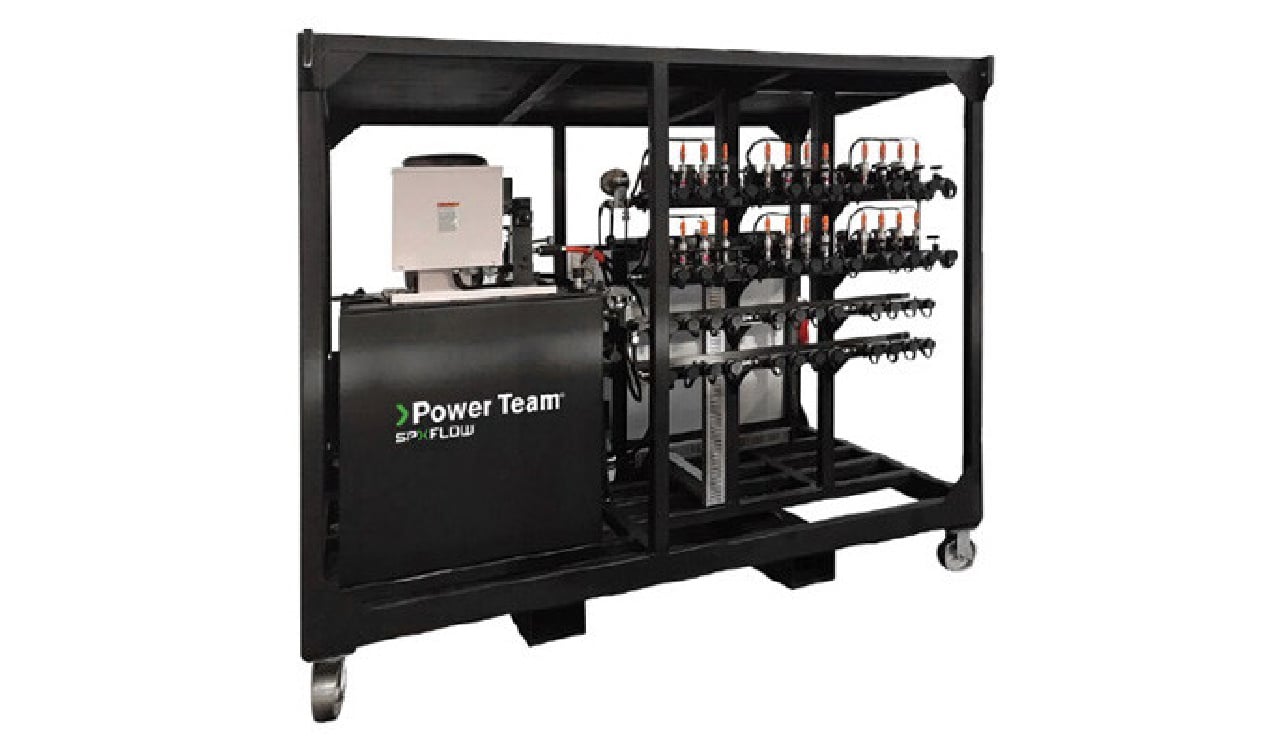
Engineering the right hydraulic solution for complex bridge and tunnel lifts starts with recognizing that the structure, not the equipment catalog, should drive every decision. Each project presents its own constraints: limited access, aging or unknown foundations, strict deflection limits over live rail, or the need to work within narrow night or weekend closures. The role of the hydraulic heavy lift specialist is to translate these requirements into a system architecture that provides sufficient capacity, precise control, and robust redundancy. The first major decision centers on the type and configuration of cylinders. For bridge bearing replacement or minor grade corrections, low-height or pancake cylinders may be ideal, allowing crews to slip tools into tight spaces between girders and pedestals. For major lifts of entire spans or tunnel segments, high-tonnage locking collar cylinders are preferred, offering greater stroke and the ability to mechanically secure the load at height. The system designer will consider anticipated loads, required lift height, allowable differential movement, and the need for staged shoring to determine cylinder count, tonnage rating, and placement. Equally important is the selection of pumps and controls. Conventional split-flow pumps offer some balance between multiple lift points but generally lack the accuracy and feedback needed for today’s high-consequence infrastructure work. More advanced controlled lifting pumps and synchronous systems distribute flow based on real-time readings for stroke and pressure at each jack, making them far better suited to projects where differential movement must be limited to a few millimeters. A recent overview of controlled lifting pump options for infrastructure environments highlights how these systems improve safety and productivity across multi-point lifts: Controlled Lifting Pumps for Infrastructure Projects: What are your Options?. Temporary works design is another pillar of a successful hydraulic solution. The best cylinders and pumps in the world cannot compensate for inadequate grillage beams, shoring towers, or spreader frames. Engineers must verify that each load path from the jack saddle into the structure and down into the foundation can handle both vertical forces and secondary effects such as torsion or out-of-plane bending. Finite element models often help identify hot spots where reinforcement or alternative load routes are required. Thoughtful detailing—such as machined bearing plates and properly aligned trunnions—reduces stress concentrations and mitigates the risk of local concrete crushing or steel yielding around lift points. In tunnel environments, hydraulic heavy lift equipment is frequently called upon to support and realign precast segments, portals, or cut-and-cover sections. Space and ventilation constraints add complexity, nudging designers toward compact pump units, low-voltage control cabling, and remote operating stations. Unified jacking systems with precise pressure control can be used to close gaps between segments or to realign misaligned elements without inducing damaging overstress in the lining. Finally, data acquisition and monitoring complete the picture. By integrating load cells, displacement transducers, and tilt sensors into the hydraulic system, engineers can verify that the structure responds as predicted throughout each stage of the lift. This feedback loop not only enhances safety in real time but also creates a record that can support post-project reviews and future design improvements. Combined with rigorous equipment inspection and maintenance regimes, these engineering practices ensure that hydraulic solutions remain dependable assets across a portfolio of complex infrastructure projects.
Best practices for heavy lift safety and risk management on infrastructure jobs
Heavy lift safety and risk management on infrastructure jobs begins long before the first cylinder is pressurized. The most successful projects treat heavy lift as a dedicated workstream with its own hazard analysis, procedures, and performance metrics. This starts with a structured risk workshop that brings together designers, contractors, equipment specialists, and owner representatives to identify failure modes and define what “safe” looks like in terms of allowable movement, load redistribution, and contingency response. One of the highest-impact safety measures is the use of engineered, programmable synchronous lifting systems instead of manually balanced pumps. By centralizing controls and automating the most delicate adjustments, these systems reduce the number of people working in close proximity to loaded jacks and minimize the potential for human error under pressure. They also introduce protective features such as stroke limits, rate-of-lift controls, and auto-shutdown if pre-set thresholds are exceeded. Industry guidance on multi-point synchronous lifts—such as instruction sheets and presentations developed for continuing education—underscore how these systems operate and the safety advantages they offer over legacy methods; for example, educational materials like the "Hydraulic Synchronous Lifting System" presentation published through professional organizations detail the fundamentals of safe operation: Hydraulic Synchronous Lifting System Presentation. Redundancy is another key principle. Mechanical lock nuts, cribbing, and secondary supports must be designed so that the structure can be safely held even in the event of hydraulic pressure loss. Crews should never rely solely on fluid pressure to support a lifted bridge or tunnel section; instead, the lift procedure should include defined “lock-off” stages at regular stroke intervals where loads are transferred onto positive supports. Clear go/no-go criteria—such as maximum allowed differential stroke between cylinders or allowable deviation from planned bearing reactions—help field teams make timely decisions about whether to proceed, pause, or reverse the lift. Human factors are equally important. Detailed method statements, lift plans, and emergency response procedures must be communicated through toolbox talks and rehearsals. Roles and responsibilities are clarified so that everyone knows who has authority to start, stop, or modify a lift. Direct, unambiguous communication channels between the control station and spotters at each lift point are essential, and many teams now rely on radios with dedicated channels and agreed-upon plain-language commands or hand signals. Finally, a culture of learning closes the loop. Post-lift debriefs allow teams to review performance against the plan, analyze data logs from the control system, and capture lessons for future projects. Small deviations—such as slightly higher-than-expected jack loads on one pier—can lead to refinements in modeling assumptions or equipment selection next time. Over multiple projects, this disciplined approach to safety and risk management not only prevents incidents but also builds an institutional knowledge base that differentiates leading infrastructure owners and contractors in a competitive market.
